

ORAL SURGERY
Dental and Zygomatic Implants in Auckland
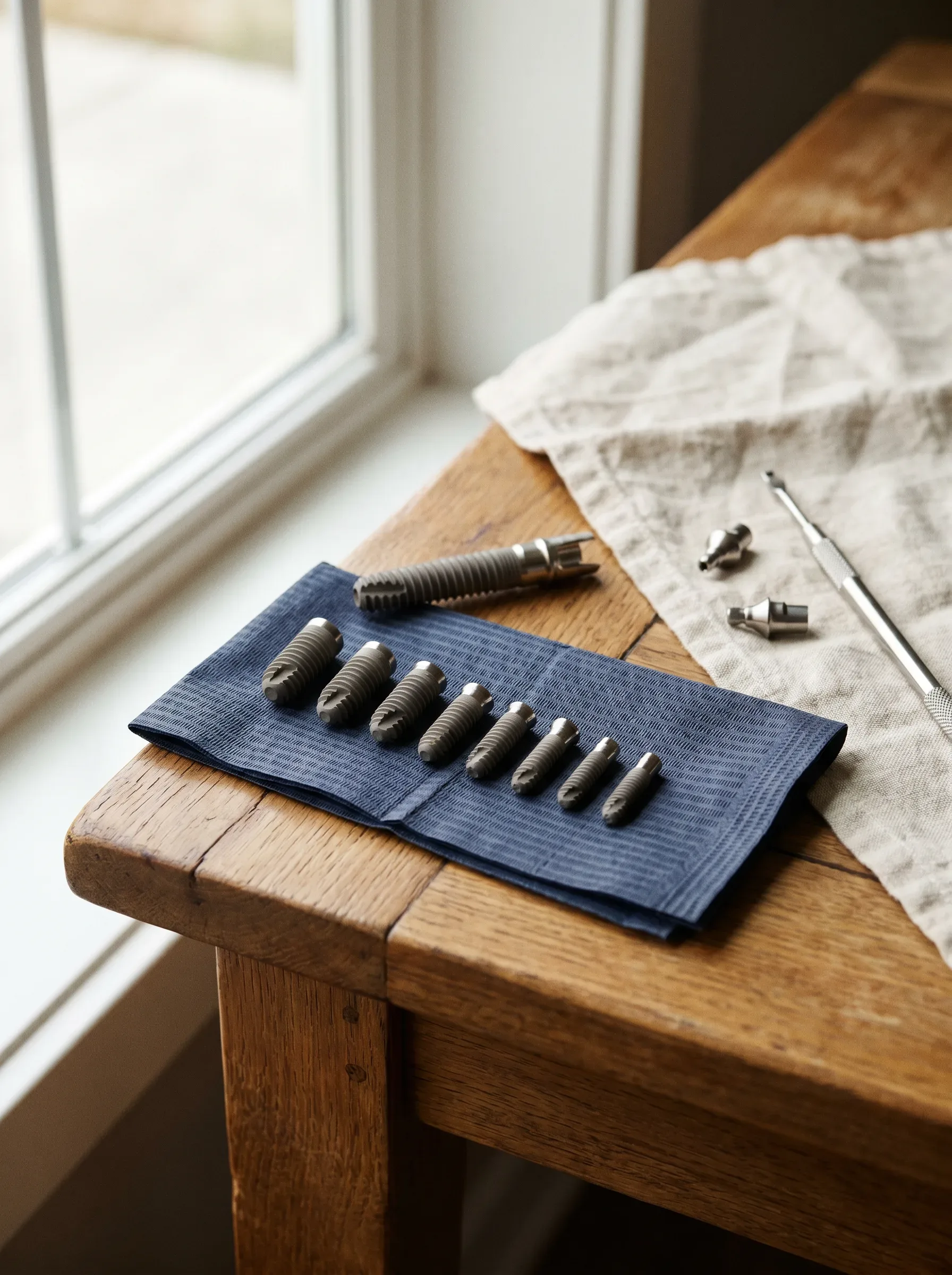
A dental implant is a titanium post placed in the jaw to replace a missing tooth. Where there is not enough upper jaw bone for a conventional implant, zygomatic implants anchored in the cheekbone can restore a fixed set of teeth without extensive bone grafting first. OMS Specialists is a private surgical practice in Newmarket, Auckland, where implant surgery is carried out by oral and maxillofacial surgeons.
QUICK ANSWER
What to expect from dental and zygomatic implants at OMS
- Dental or zygomatic implant placement
- Local, IV sedation, or general anaesthetic (zygomatic usually under GA)
- 45 to 120 minutes
- Day-stay for all dental implants
- 8 to 12 weeks before the final teeth are fitted
- Detailed cost estimate provided before surgery
WHAT IT IS
What are dental and zygomatic implants?
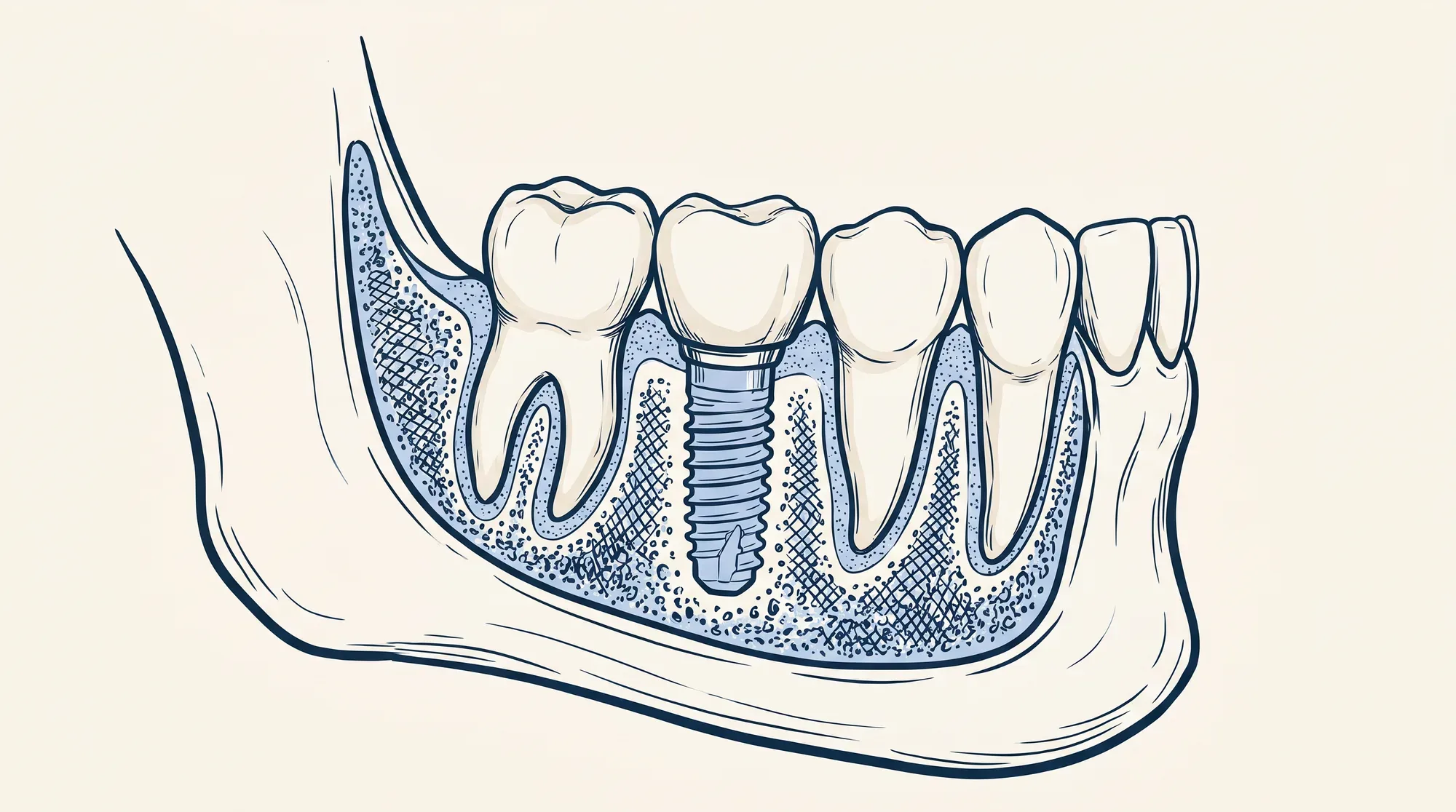
A dental implant can support a ceramic crown or bridge to replace a single tooth or a group of teeth, or anchor a full-arch prosthesis as a more stable alternative to full dentures.
A zygomatic implant is a longer implant inserted deeper into the upper jaw and extending into the cheekbone (the zygoma). It is useful for patients who have lost bone in the upper jaw, and can allow a fixed prosthesis without extensive bone grafting first.
We work alongside your own dentist or prosthodontist, who fits the final crown or prosthesis once the implant has integrated with the bone.
IS THIS FOR YOU
When implants may be the right option
Implants suit a range of situations, from a single missing tooth to a full arch. A consultation with CBCT imaging confirms whether they are right for you.
-
Replacing missing teeth
A single tooth, a group of teeth, or all the teeth in an arch can be replaced with implants.
-
An alternative to dentures
Dental implants can support a fixed replacement for missing teeth, providing a more stable alternative to removable dentures for suitable candidates.
-
Not enough upper jaw bone
Where conventional implants are not possible due to insufficient upper jaw bone, zygomatic implants anchored in the cheekbone may be an option.
-
Bone grafting needed first
When the site needs augmentation, the grafting and the implant placement are planned together as one surgical pathway.
-
A team approach with your dentist
Implant treatment is planned with your dentist or prosthodontist, who fits the final crown or prosthesis once the implant has integrated.
When to involve a surgeon
Maxillofacial surgeons place implants across every case
Maxillofacial surgeons manage implant cases of all complexities, from single-tooth replacement to full-arch rehabilitation. We work alongside your dentist or prosthodontist, who restores the final crown or prosthesis after the implant has healed. A surgeon may be particularly beneficial when:
-
Upper jaw bone is limited
Zygomatic implants may avoid the need for extensive bone grafting.
-
Bone grafting or a sinus lift is required
Augmentation and implant placement can be planned as part of the same surgical treatment.
-
Full-arch rehabilitation is planned
Fixed implant-supported bridges, including All-on-4 and All-on-6 treatments.
-
Anatomy is complex
Careful planning around structures such as the inferior alveolar nerve or maxillary sinus using CBCT imaging.
-
Additional medical support is needed
Including patients requiring IV sedation or general anaesthesia.
How a dental implant works
Your treatment
Step by step at OMS Specialists, Newmarket
Implant treatment is staged over a few months. Here is what happens from your first consultation through to the final teeth.
- 01 Before
Consultation and 3D planning
You meet your surgeon, we assess the site and your medical and dental history, and we plan the implant position from CBCT 3D imaging.
- A CBCT 3D scan maps the available bone and the position of nerves and the sinus
- Anaesthesia chosen with your surgeon: local, IV sedation, or general anaesthetic
- A detailed cost estimate for the surgical placement, provided before surgery
- 02 During
Implant placement
The implant is placed into the bone using the 3D plan. Where bone is limited, grafting or a zygomatic approach is carried out as part of the same procedure.
- The gum is lifted and the implant positioned to the plan
- Bone grafting or a sinus lift is done at the same time where it is needed
- For zygomatic cases the implant is anchored in the cheekbone rather than the upper jaw
- 03 After
Healing and the final teeth
Dental implant placements are day-stay. The implant then integrates with the bone before the final teeth are fitted by your dentist.
- Day-stay for all dental implants
- The implant integrates with the bone over 8 to 12 weeks
- Your dentist or prosthodontist fits the final crown or prosthesis once integration is confirmed
Anaesthesia
Anaesthesia options
We guide you to the right anaesthetic at consultation, based on the complexity of your case, your preference and any medical considerations. Straightforward implants are often placed under local anaesthetic or sedation at our Auckland Day Surgery Centre in Newmarket; zygomatic and complex cases are managed under general anaesthetic.
-
Local anaesthetic
A numbing injection at the site only. You are awake and aware and can usually drive yourself home.
- Single or straightforward implant placement
- Lowest tier
-
IV sedation (twilight)
Awake but deeply relaxed, with little or no memory of the procedure. You will need someone to drive you home.
- Multiple implants, grafting, or dental anxiety
- Mid-tier, plus sedation team fee
-
General anaesthetic
Fully asleep, with the same OMS surgeon looking after you throughout. Used for zygomatic and other complex cases.
- Zygomatic implants, full-arch rehabilitation, medically complex cases
- Highest tier, theatre plus GA team
Risks
Risks we discuss before consent
All surgery carries risk. These are the principal risks we talk through with you before consent.
Common, manageable
Long-term, preventable
Infection or peri-implantitis
Infection around an implant is uncommon and usually manageable. Over the long term, good oral hygiene and regular dental maintenance help reduce the risk of peri-implantitis, a leading cause of implant failure.
Upper jaw only
Sinus involvement
Upper jaw implants may require a sinus lift when bone height is limited. In some cases, zygomatic implants can avoid the need for this by anchoring in the cheekbone.
Less common, discussed during consent
Implant failure
A small number of implants do not integrate with the bone and may need to be removed and replaced. Smoking, poorly controlled diabetes and active gum disease increase this risk.
Temporary or permanent altered sensation
Lower jaw implants are planned using CBCT imaging to avoid the inferior alveolar nerve. Although uncommon, numbness or altered sensation of the lip or chin is a recognised risk discussed before treatment.
Recovery
Recovery and osseointegration
Most patients return to desk-based work within a few days of implant placement. The implant then integrates with the bone over 8 to 12 weeks before the final teeth are fitted.
- First 48 hours
Day-stay
Day-stay for all dental implants. Rest with the head elevated, soft diet, ice to the cheek and prescribed pain relief.
- Week 1 to 2
Back to desk work
Soft diet continues. Most patients return to desk-based work within a few days of implant placement.
- Weeks 8 to 12
Osseointegration
The implant integrates with the bone over this period. A follow-up confirms it has integrated before the final teeth are fitted.
- After integration
Final teeth
Your dentist or prosthodontist places the final crown or prosthesis once the implant is firmly integrated.
Do
- Eat soft foods and chew away from the implant site for the first week.
- Keep the area clean with gentle oral hygiene and any prescribed rinses.
- Take prescribed medications as directed.
- Contact us if you have increasing pain, swelling or any concerns.
Don't
- Smoke or vape, as this can impair healing and reduce implant success.
- Disturb the surgical site with your tongue, fingers or utensils.
- Resume strenuous exercise until your surgeon advises it is safe.
Cost
What dental and zygomatic implants cost in Auckland
The surgical fee depends on the complexity of your case, the number of implants, and whether bone grafting or zygomatic implants are involved. A detailed, itemised cost estimate is provided before surgery, at your consultation. The final crown or prosthesis is costed separately by your dentist or prosthodontist.
What affects your cost
- Whether you need one implant or several
- Dental implants or zygomatic implants
- Whether bone grafting or a sinus lift is required
- Anaesthetic chosen: local, IV sedation, or general
What your surgical quote includes
- Consultation
- CBCT 3D imaging as needed
- Surgical placement fee
- Anaesthetic team where applicable
- Post-operative review through the healing period
YOUR SURGEONS
Your surgeons
Implant surgery at OMS Specialists is carried out by our three surgeons, who hold qualifications in both dentistry (BDS) and medicine (MBChB or MBBS), with Fellowship from the Royal College of Surgeons (FRCS) or Australasian College of Dental Surgeons (FRACDS). We work alongside your own dentist or prosthodontist, who fits the final crown or prosthesis.


FAQ
Questions we hear from implant patients in Auckland
What kinds of implant cases do maxillofacial surgeons place?
Maxillofacial surgeons are trained to place dental implants in all scenarios, from a simple single-tooth replacement through to complex full-arch and extra-maxillary cases. That surgical training is particularly valuable where there is insufficient bone for conventional implants (an atrophic upper jaw, or zygomatic cases), where combined bone grafting or a sinus lift is required, or where the case involves complex anatomy near the inferior alveolar nerve or the maxillary sinus. We work alongside your dentist or prosthodontist, who places the final crown or prosthesis.
What are zygomatic implants?
A zygomatic implant is a longer implant inserted deeper into the upper jaw and extending into the cheekbone (the zygoma). It is useful for patients who have lost bone in the upper jaw, where there is not enough bone to support a conventional implant. Zygomatic implants can allow a fixed set of teeth to be placed in patients who would otherwise need extensive bone grafting first.
How long does the whole implant process take?
After the implant is placed, it needs time to integrate with the bone (osseointegration), which typically takes 8 to 12 weeks before the final crown or prosthesis is fitted. Where bone grafting is needed first, this can extend the timeline. Some cases allow immediate-load protocols, where a temporary prosthesis is fitted at the time of placement.
What do dental and zygomatic implants cost?
The cost depends on how many implants you need, whether zygomatic implants or bone grafting are involved, and your anaesthetic. A detailed, itemised cost estimate for the surgical placement is provided before surgery, at your consultation; the final crown or prosthesis is costed separately by your dentist or prosthodontist.
Patient experience
Reviews from recent patients
OMS Specialists' patients share their experiences on Google, where reviews are independent and unedited. Read what recent patients say about their care, including dental implant procedures.
Read reviews on Google →Call us urgently if…
Concerns after surgery
Phone us early rather than late. The after-hours number is on the take-home pack.
(09) 477 0058- Bleeding that does not stop after 10 minutes of firm pressure on a gauze pack
- Severe escalating pain not responding to prescribed pain relief
- Fever above 38.5°C
- Pus discharge or a persistent bad taste three or more days after surgery
- Numbness in your lip or chin that does not recover after a lower-jaw implant
- Significant facial swelling spreading down toward your neck
RELATED PROCEDURES
Other oral surgery we perform
-
ORAL SURGERY
Bone augmentation & grafting
Rebuilding bone in the jaw or the floor of the sinus, often planned before or alongside dental implant placement.
Learn about bone grafting -
ORAL SURGERY
Surgical removal of teeth
Removing failing, broken or unrestorable teeth, often the step before an implant can be placed.
Learn about surgical extractions -
ANAESTHESIA & SEDATION
General anaesthesia
Fully asleep care for zygomatic implants, full-arch rehabilitation and other complex implant surgery.
Learn about general anaesthesia
WAYS TO GET IN TOUCH
Starting the conversation
FOR PATIENTS
Request an appointment
Tell us a little about your situation and we'll be in touch within one business day with available consult times.
Request appointmentFOR DENTISTS & GPs
Refer a patient
Electronic referral via Healthlink or our online referral form. We acknowledge every referral within 24 to 48 hours.
Refer a patientBY PHONE
Call our rooms
Speak with our team during business hours. Best if you have any imaging or a referral letter ready.
Call (09) 477 0058